Trombone Slide Position Chart
Select a concert-pitch bass-clef note to see its standard tenor trombone slide position, useful alternates, and F-attachment notes.
Select Note
Slide position 7
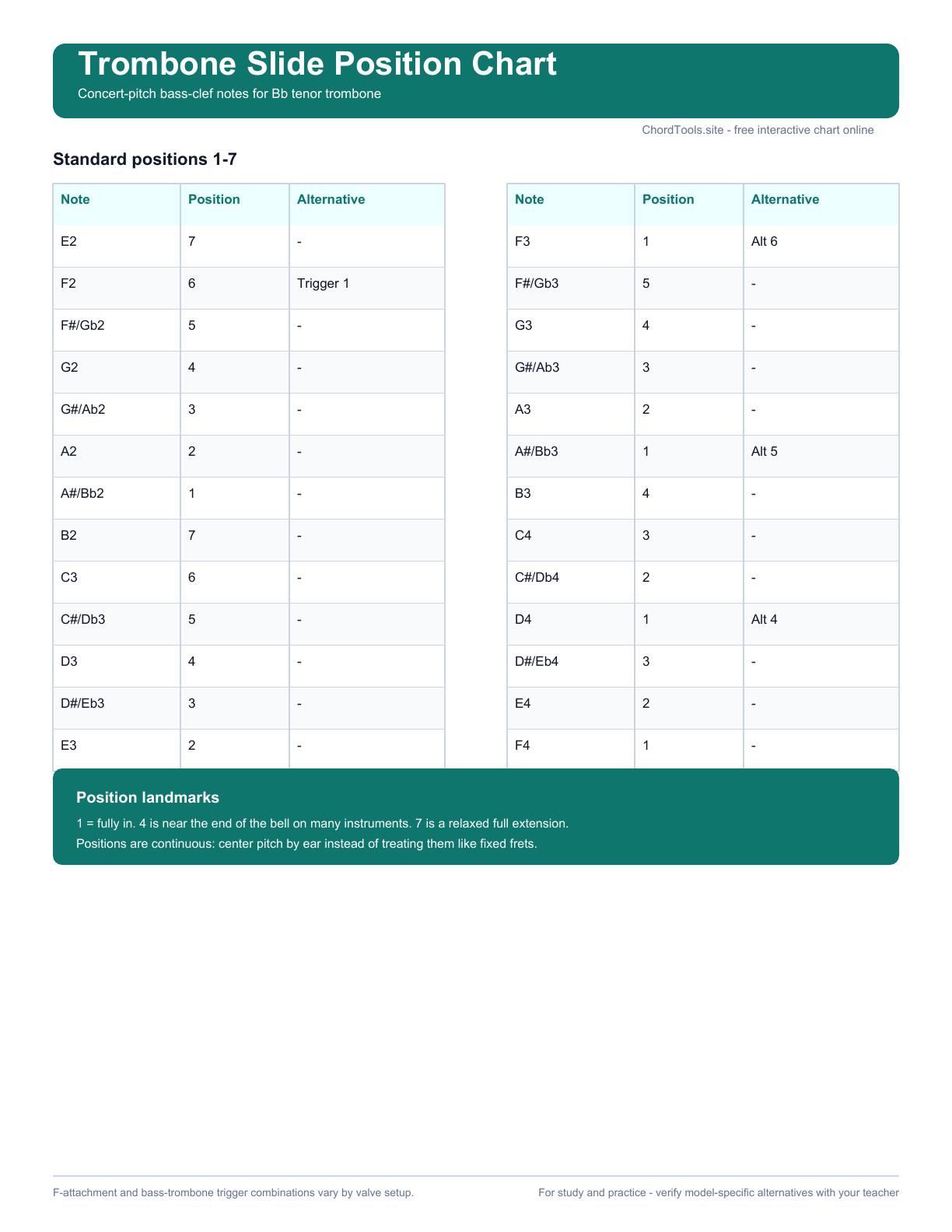
Printable Trombone Slide Position Chart PDF
Print positions 1-7 for common beginner and intermediate bass-clef notes, with selected alternate positions and an F-attachment reminder.
Download Position ChartHow to Read Trombone Slide Positions
First position is fully in near the bell. Each larger number extends the slide farther. The numbered locations are reference points rather than frets, so use your ear to center every note.
- Position 1 is fully in.
- Position 3 is near the bell brace area on many instruments.
- Position 4 places the outer slide around the end of the bell.
- Positions 6 and 7 require a relaxed full extension; never force the slide.
Build Positions by Sound and Feel
Move slowly between neighboring positions while sustaining steady air. Check the tuner only after the tone is centered, because temperature, dynamics, and the harmonic partial change the exact placement.
Alternate Trombone Positions
Some notes can be played in more than one position because adjacent harmonic series overlap. Alternate positions can reduce slide travel or improve a passage, but they may require a different adjustment for pitch.
F-Attachment and Bass Trombone Notes
An F attachment lengthens the instrument when the trigger is pressed. It can replace long sixth-position F with trigger first and unlock notes below low E. Trigger-position spacing is wider than the open instrument, and dual-valve bass trombones require a setup-specific chart.
Trombone Position Questions
How many slide positions does a trombone have?
A standard trombone has seven numbered slide positions. First position is fully in and seventh is the farthest standard extension.
Why can one trombone position play several notes?
Each slide position creates a tube length with a harmonic series. The player's buzz, air, and embouchure select the partial.
Does this chart work for bass trombone?
The open tenor-range positions apply, but bass trombone trigger combinations and very low notes vary with the valve setup and tuning.