Flute Fingering Chart
Master beginner C flute notes with our interactive visual guide and free printable flute fingering chart PDF.
Select Note
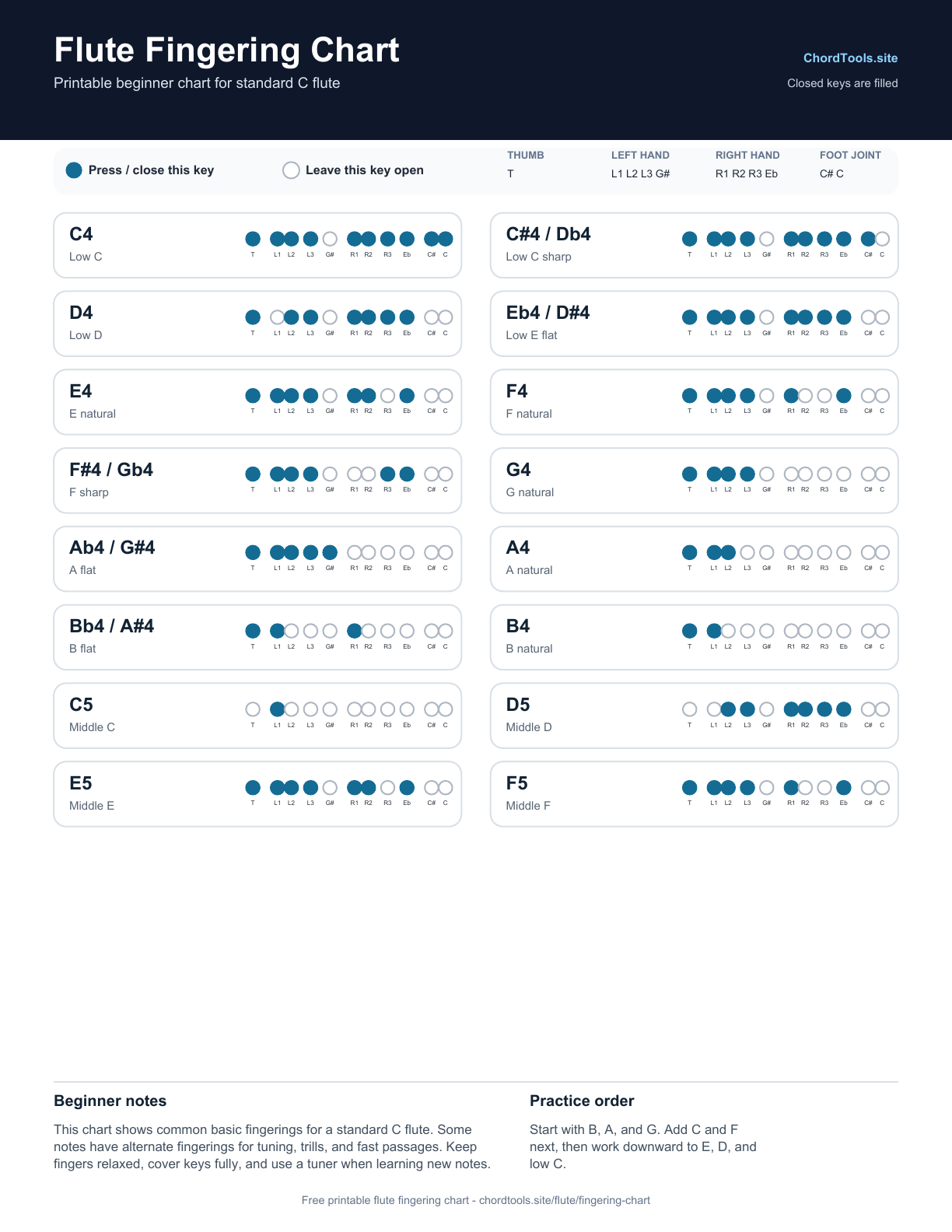
Free Printable Flute Fingering Chart PDF
Print a clean one-page beginner chart with common fingerings for low C through middle F. It is designed for quick practice, band folders, and lesson handouts.
Download PDFHow to Read a Flute Fingering Chart
A flute fingering chart shows you which keys to press (closed) and which to leave open for any given note. Our interactive tool uses high-contrast colors to indicate exactly what your fingers should be doing:
- Highlighted Circles: These keys should be pressed down firmly.
- Transparent Outlines: These keys should remain open.
- Labeled Components: We've marked Left Hand, Right Hand, and Thumb keys to help you orient yourself.
Tips for Beginners
When starting out, focus on obtaining a clear tone before moving quickly through the notes. Ensure your embouchure is steady and your air stream is consistent.
Did you know?
The flute is unique among woodwinds as it has no reed. The sound is produced by blowing air across the embouchure hole, creating a vibrating column of air inside the tube.
Common Questions
Why do some notes have multiple fingerings?
These are called 'alternate fingerings'. They are used for technical passages or to slightly adjust the pitch/tuning of a specific note.
How should I hold the flute?
Balance the flute between your left hand index finger, right hand thumb, and your chin. Finger placement should be relaxed.